Luxor · Egypt · Nymphaea caerulea

When the blue lotus returns to the Nile, peace returns to the earth.

One pond on the west bank has kept the true flower alive for seventeen years, on the ground where the original temple stood. The concrete has cracked. The water is draining and the roots lie open to the sun.

A single blue lotus open above dark water, two closed buds beside it
This week
$0 of $3,000
0 patrons
Painted temple ceiling showing Nut, the sky goddess, arched in blue and gold
The same story, painted overhead

Nut swallows the sun at dusk and gives birth to it again at dawn. The blue lotus closes at dusk and opens at sunrise. The same daily resurrection, one painted on a tomb ceiling in the Valley of the Kings, one growing in the water a few miles away.

The flower of rebirth
Carved into the columns of Karnak. Painted in the Valley of the Kings. Laid across the body of Tutankhamun. Almost gone from the Nile.
Nymphaea caerulea · the Nile Lily

The line at the top of this page is not quoted from an ancient text. It has come through as a download to many people who work with this flower, and it is repeated among them. The lotus as the sign of rebirth is genuinely ancient and written into the Coffin Texts. The saying is newer than that, and we would rather tell you so than dress it up.

What happened

Seventeen years of blooming, and then the concrete cracked

The blue lotus opens with the sunrise and closes at dusk. To the ancient Egyptians it was the flower of rebirth. The English called it the Nile Lily. It has nearly vanished from the wild Nile.

In a garden on the west bank of Luxor, near the Temple of Hatshepsut, these lotuses have been tended for seventeen years by Mary Lomando. It started as a small pond. As the plants took, the pond was dug wider and deeper to hold them. Papyrus and pink water lilies grow at the banks. Kingfishers and sparrows nest in the reeds.

The garden has been carried by Mary with quiet help from a few friends over the years, never publicly and never at this scale.

They came through seventeen summers. What has changed is the heat. Egypt is running hotter than it did, and this year the concrete gave.

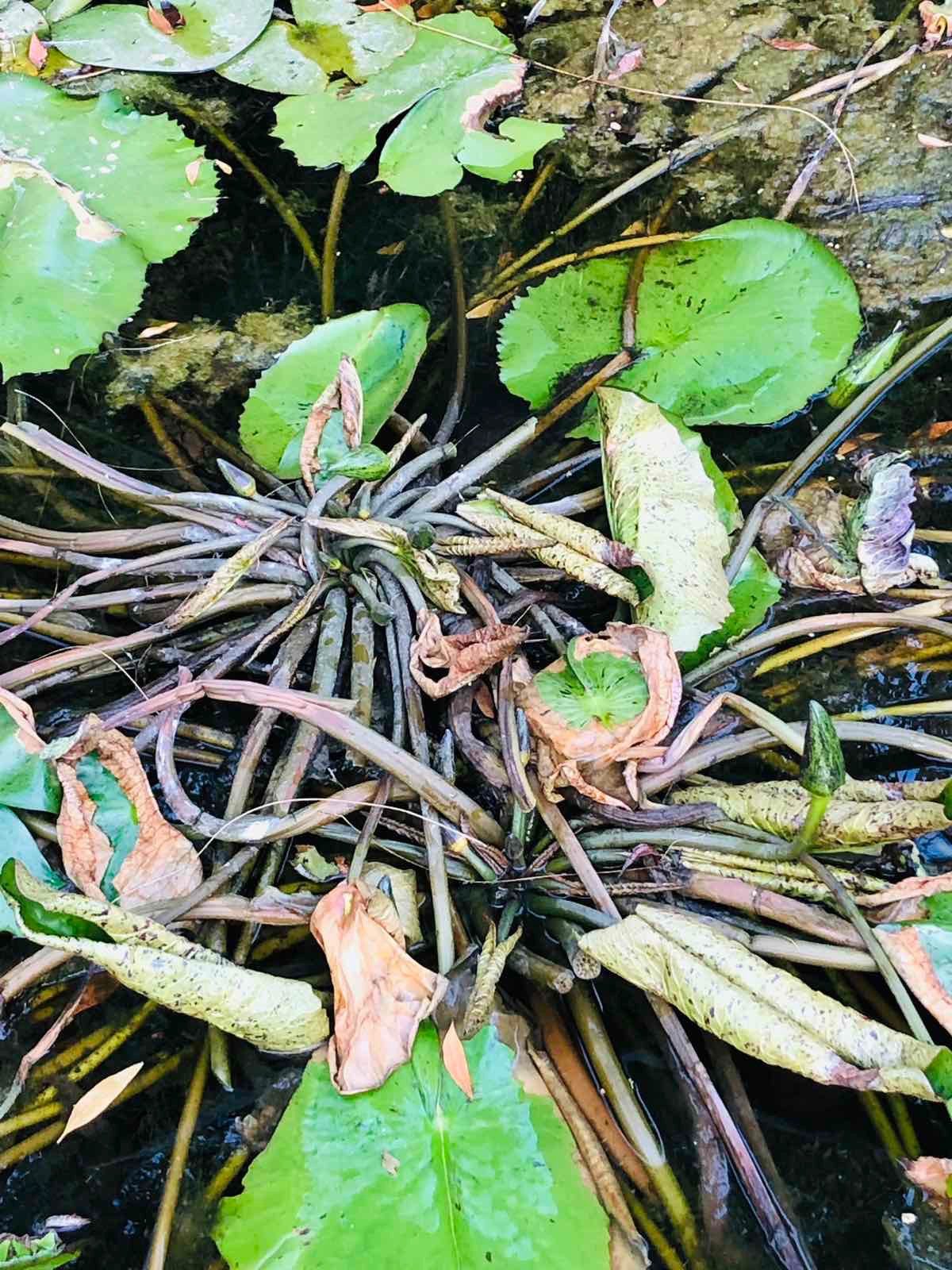
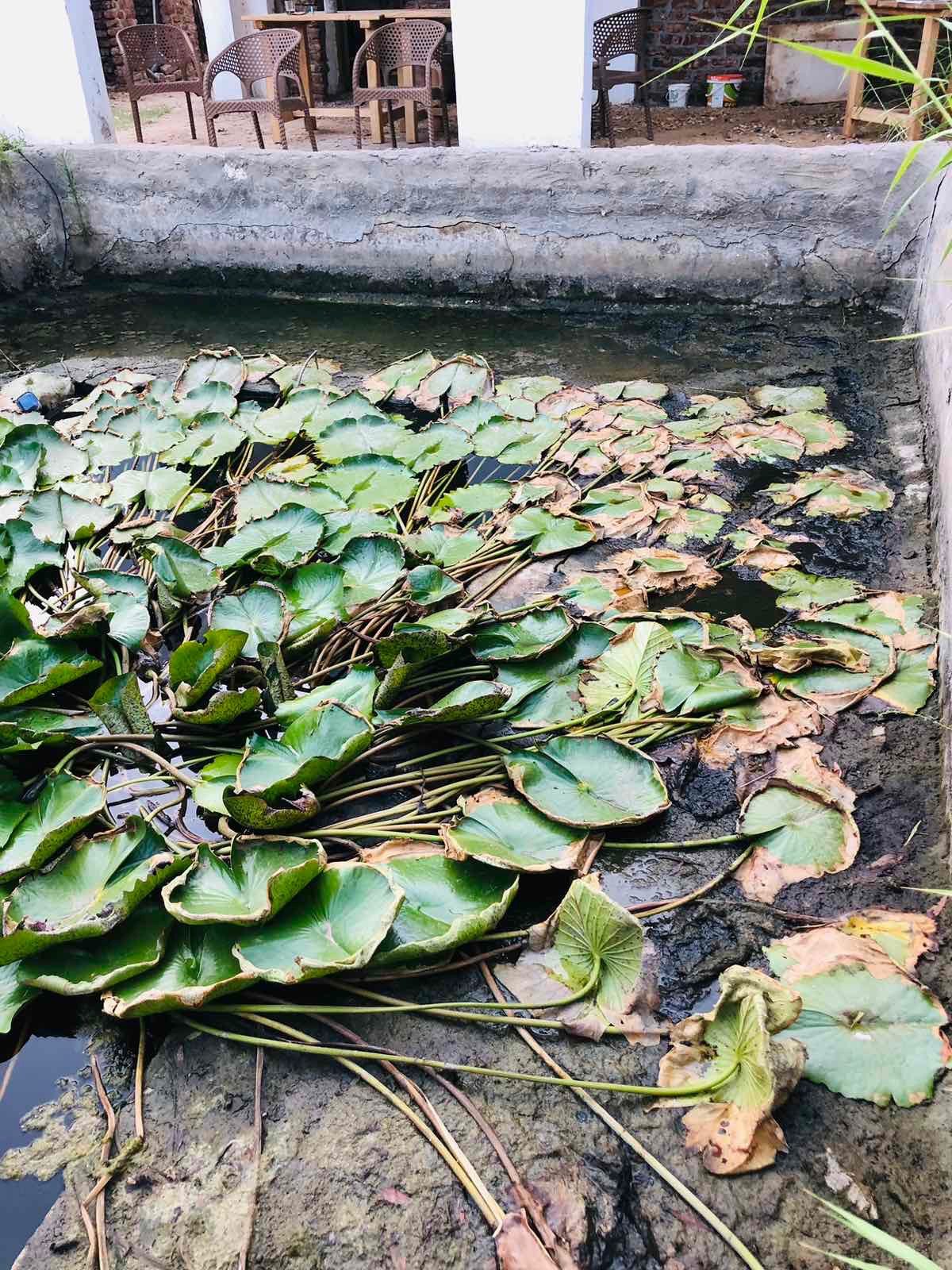
Six weeks ago the pond was full of open flowers. Then the water began leaking out through the crack. It now drains faster than it can be refilled. The pads have collapsed against the sides and the lotus crowns, root masses that took seventeen years to establish, are lying exposed above the water line. Once the rhizomes dry out fully they cannot be revived.

We have days, not months.

Why these lotuses

Wider than a face, and rescued once already

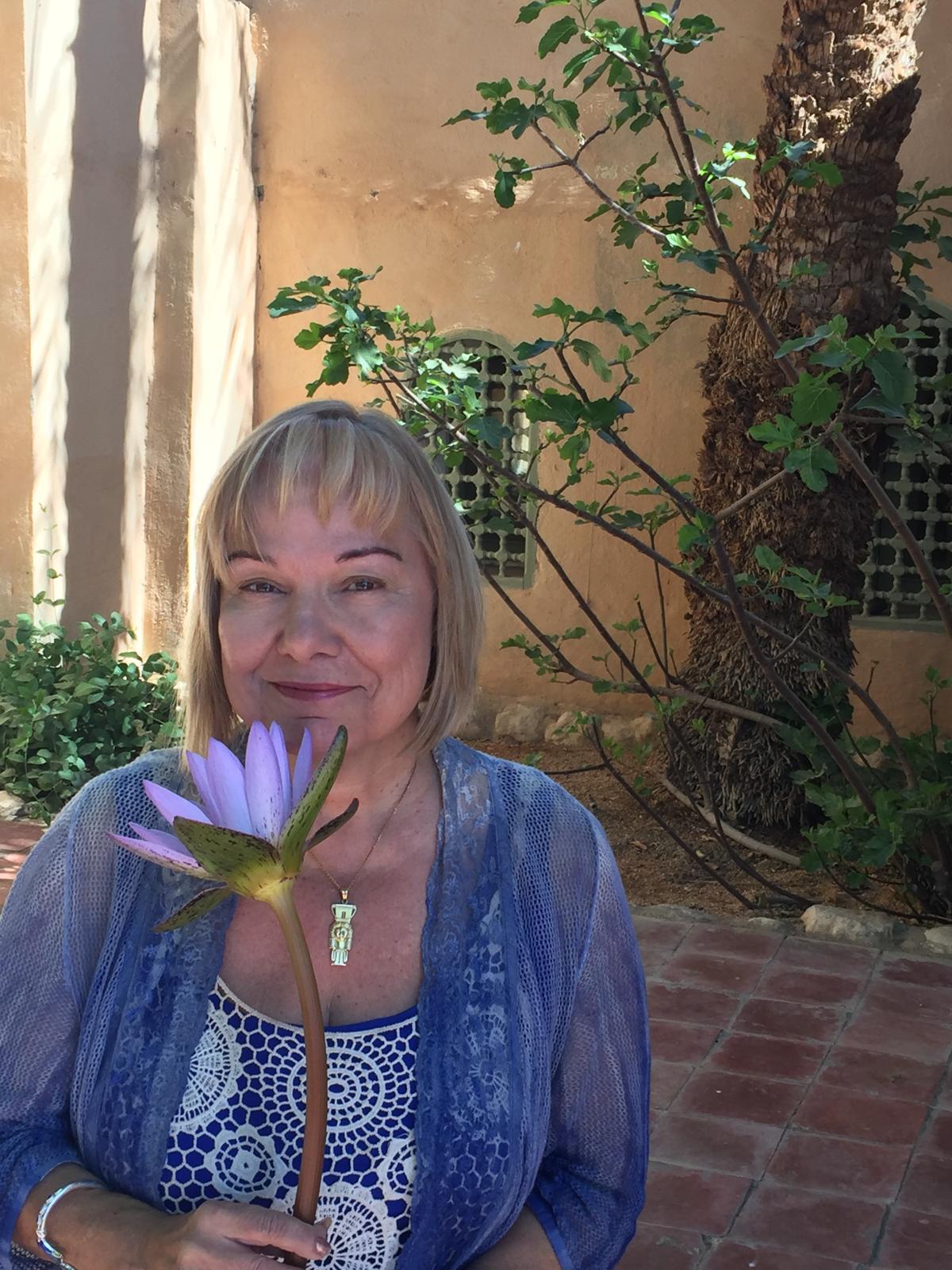
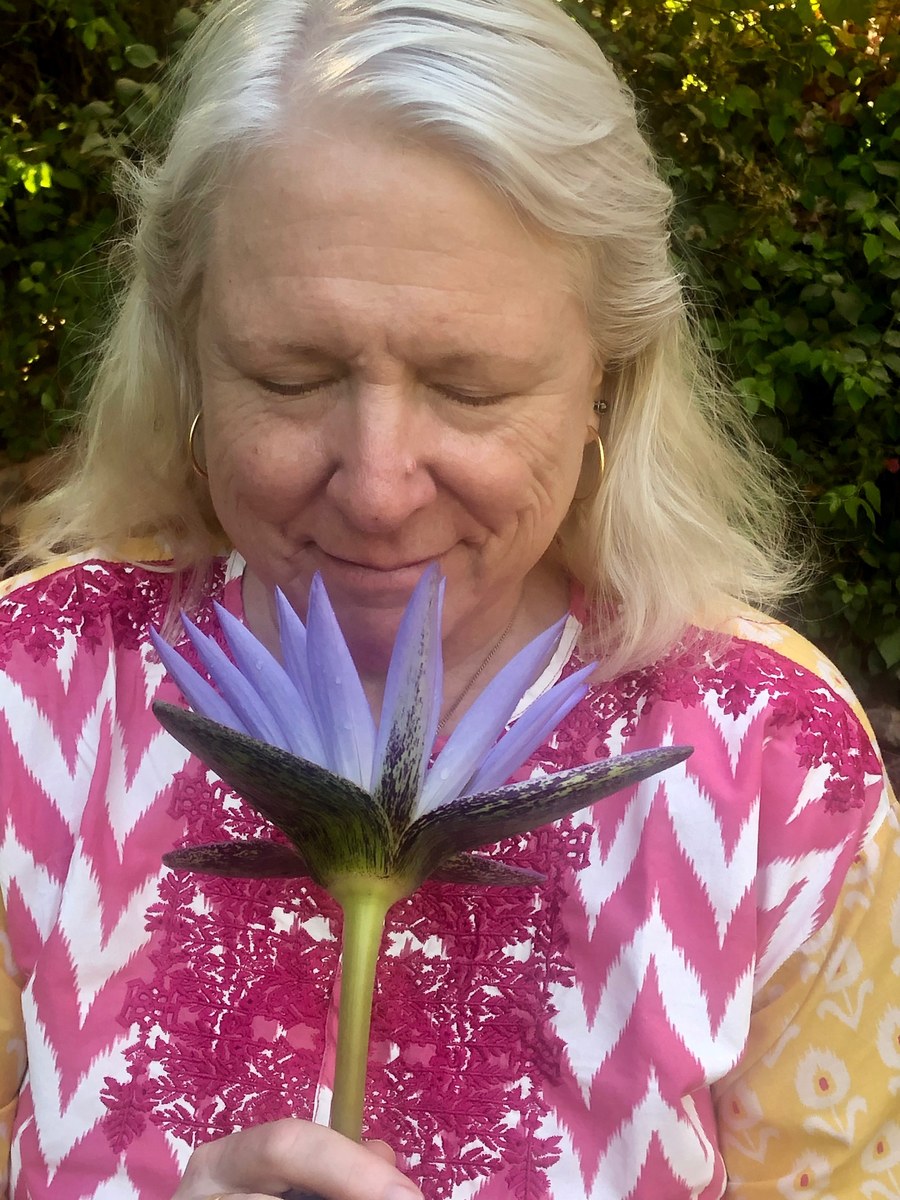
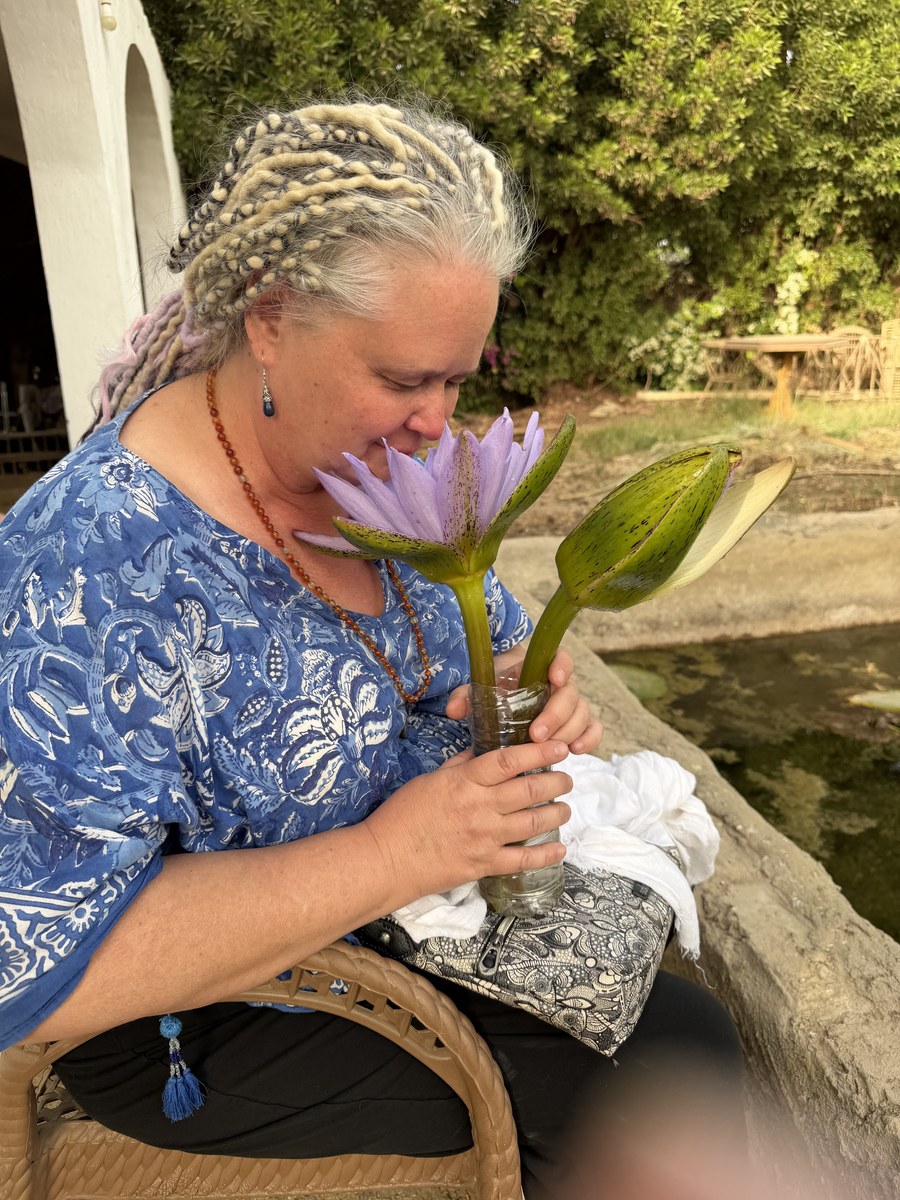
Mary Lomando holding a blue lotus to her face, the bloom as wide as her face

Almost every blue lotus sold today is flown in from Sri Lanka or Hawaii. Those blooms are a fraction of this size.

These are true Nile stock. They were found growing in a lake in South Sudan between 2006 and 2007, in the years before the war, and brought north as a private gift to the Egyptian owner of the land where Mary had built her retreat house. That retreat house became the temple the blue lotus now grows around.

They have been resurrected once already. Osiris was scattered and Isis gathered the pieces and brought him back, and the lotus is the flower that rises out of that story. These plants were lifted out of one country before it fell apart and brought back to life in another. Now they are dying a second time, and the gathering has to happen again.

Map showing the pond between Karnak, Luxor Temple and the Temple of Hatshepsut
Karnak, Luxor Temple, and the Temple of Hatshepsut. The pond sits between them on the west bank.
Why here

The ground is part of the plant

These are indigenous blue lotus growing on the Egyptian mainland, on 18th dynasty ground. The land of Thutmose and Hatshepsut, where the original temple stood.

The location was not chosen for convenience. There is a sacred geometry to where this pond sits, and the plants answer to what is held in that ground. Grown somewhere else they are flowers in water. Grown here they are doing the work they were planted to do.

The pond holds space for a new timeline. A vision of beauty, peace, harmony and longevity, rooted at the place where that vision was first cut into stone.

These flowers need to be here now, for the golden age rising in Egypt and for the lifting of the collective.

The land is private. The intention is a private retreat and a revived temple, held for the people who help bring it back.

The ground
The 18th dynasty temple site below the cliffs on the west bank of Luxor
The pond
The pond full of lily pads at first light, papyrus and trees behind it

The original temple ground, and the water a short walk from it. The pond began small and was dug wider as the plants took.

How to tell a real one

Most "blue lotus" is a different plant

Search for blue lotus and you will find petals, teas, oils and vapes, nearly all of them showing the same vivid electric blue flower. That is not Nymphaea caerulea. It is a common water lily that looks the part, mostly grown in Sri Lanka and Hawaii. The real Egyptian flower is paler, and almost nobody selling it has ever seen one.

A blue lotus bloom in the Luxor pond, annotated to show the identifying characteristics Pale whitish lavender, never electric blue Narrow petals, pointed at the tip Golden heart Spotted sepals, the marker Berkeley identifies
Our pond, this March. Every marker of Nymphaea caerulea in one frame.
The Egyptian flower
  • Pale, whitish lavender, warm yellow heart
  • Narrow petals that come to a point
  • Spotted sepals on the underside
  • Large. A single bloom can be wider than a hand span
  • Threatened, close to endangered, and effectively gone from the wild Nile since the Aswan dam ended the annual flood in 1970
What is usually sold
  • Saturated electric blue
  • Broader, rounder petals
  • No sepal spotting
  • Noticeably smaller
  • Common, farmed, and shipped worldwide in bulk
Two blue lotus blooms showing the dark spotted sepals on the underside
The spotted sepals, visible on the underside of the bloom. This is the marker the Berkeley work uses to separate the true Egyptian flower from the water lily sold as it.
UC Berkeley · March 2025
A researcher searched the world's botanical gardens for a living Egyptian blue lotus and could not find one.

Liam McEvoy, working with Berkeley's chemistry department, ran mass spectrometry on verified Egyptian blue lotus against petals bought online. The online product had far lower nuciferine and appears to be an ordinary water lily. Unable to source a specimen from any botanical garden in the world, he eventually bought a living plant from a stranger on the internet.

This pond is full of them, and it is drying out

Read the research

Why this matters

If the flower being sold everywhere were the real one, this pond would be replaceable. Order more, plant them, carry on. That is what most people assume when they hear a lotus pond is in trouble.

It is not what is happening. The plant sold in bulk is a different species. The real one is threatened, close to endangered, and effectively gone from the wild Nile since the Aswan dam ended the annual flood in 1970. A researcher at Berkeley could not obtain a living specimen from any botanical garden on earth.

These cannot be reordered. If this pond dries out, that is a population gone, not a garden that needs replanting.

Our plants came out of a South Sudanese lake before the war and match the described characteristics. We are seeking formal verification, and we will publish it either way.

The pond

The same water, six weeks apart

June
The pond in June, covered in open blue lotus blooms
Last Sunday
The pond last Sunday, water gone, pads collapsed against cracked concrete
June
Blue lotus blooms open across the pond in June
Last Sunday
Lotus crowns and rhizomes exposed above the water line
At its prime
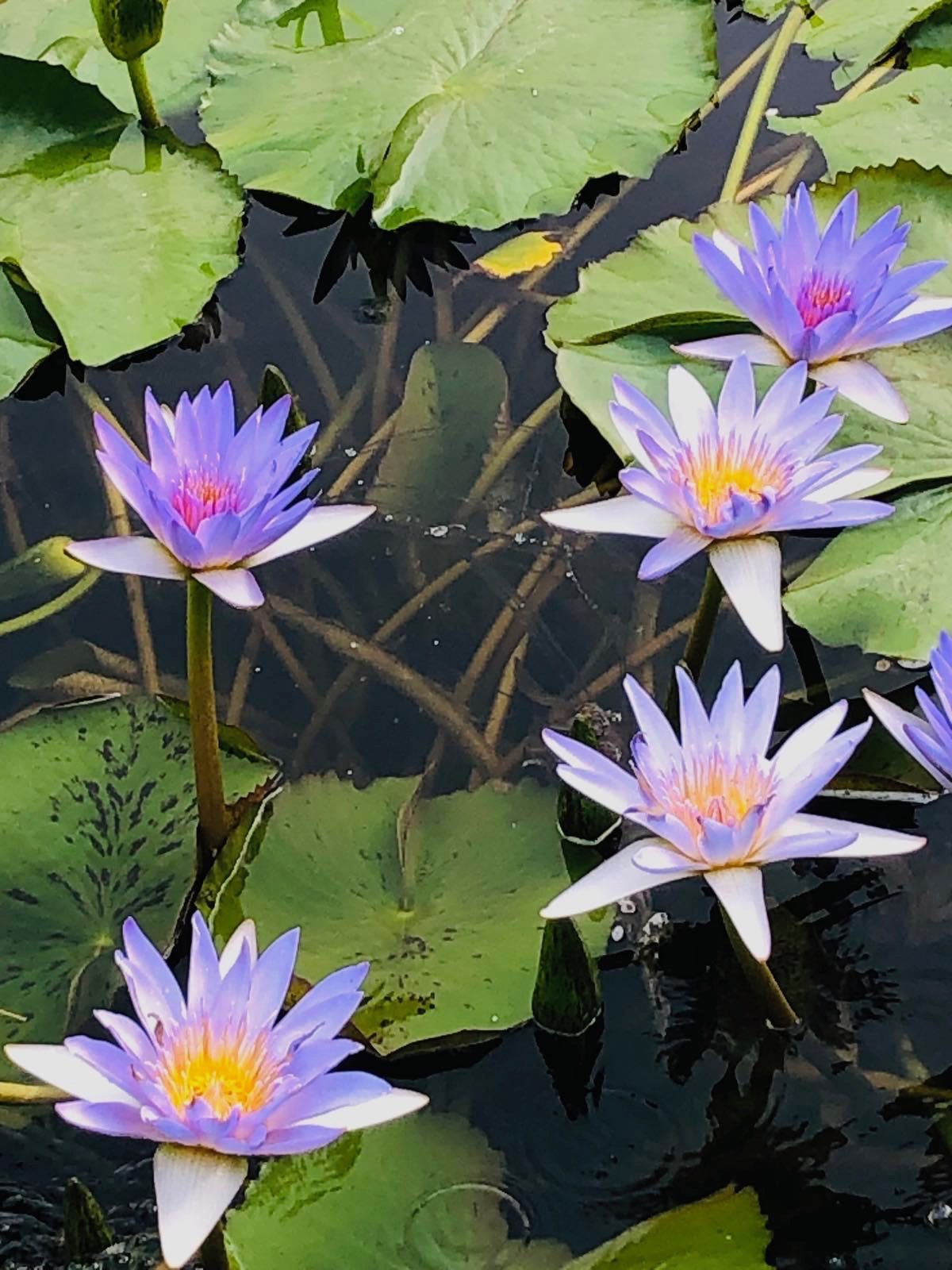
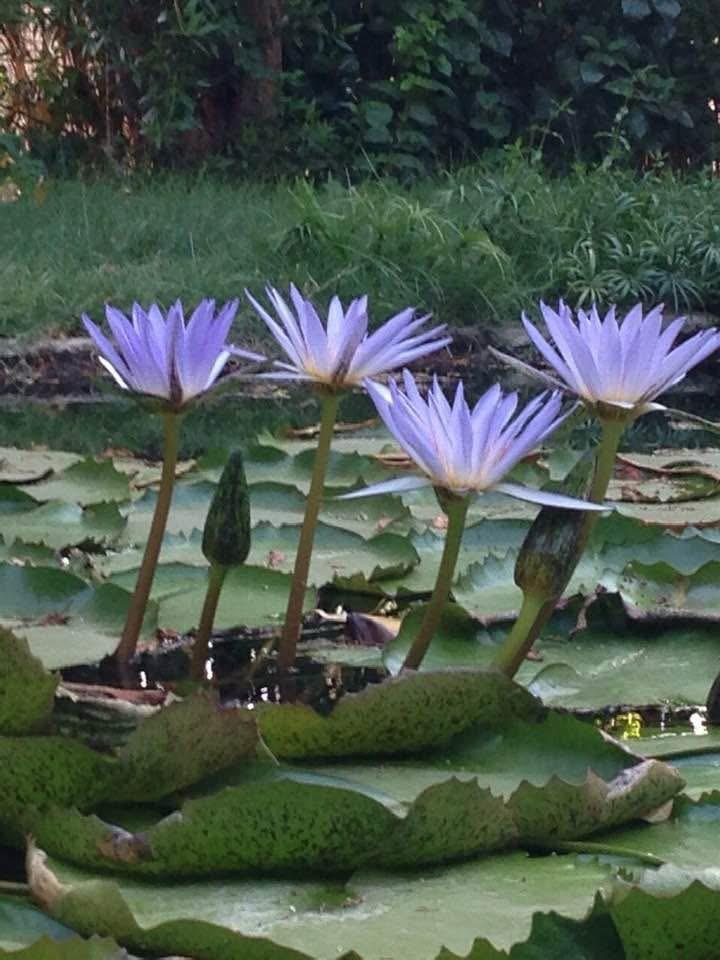
Four blue lotus standing open on their stems above the pads
At its prime
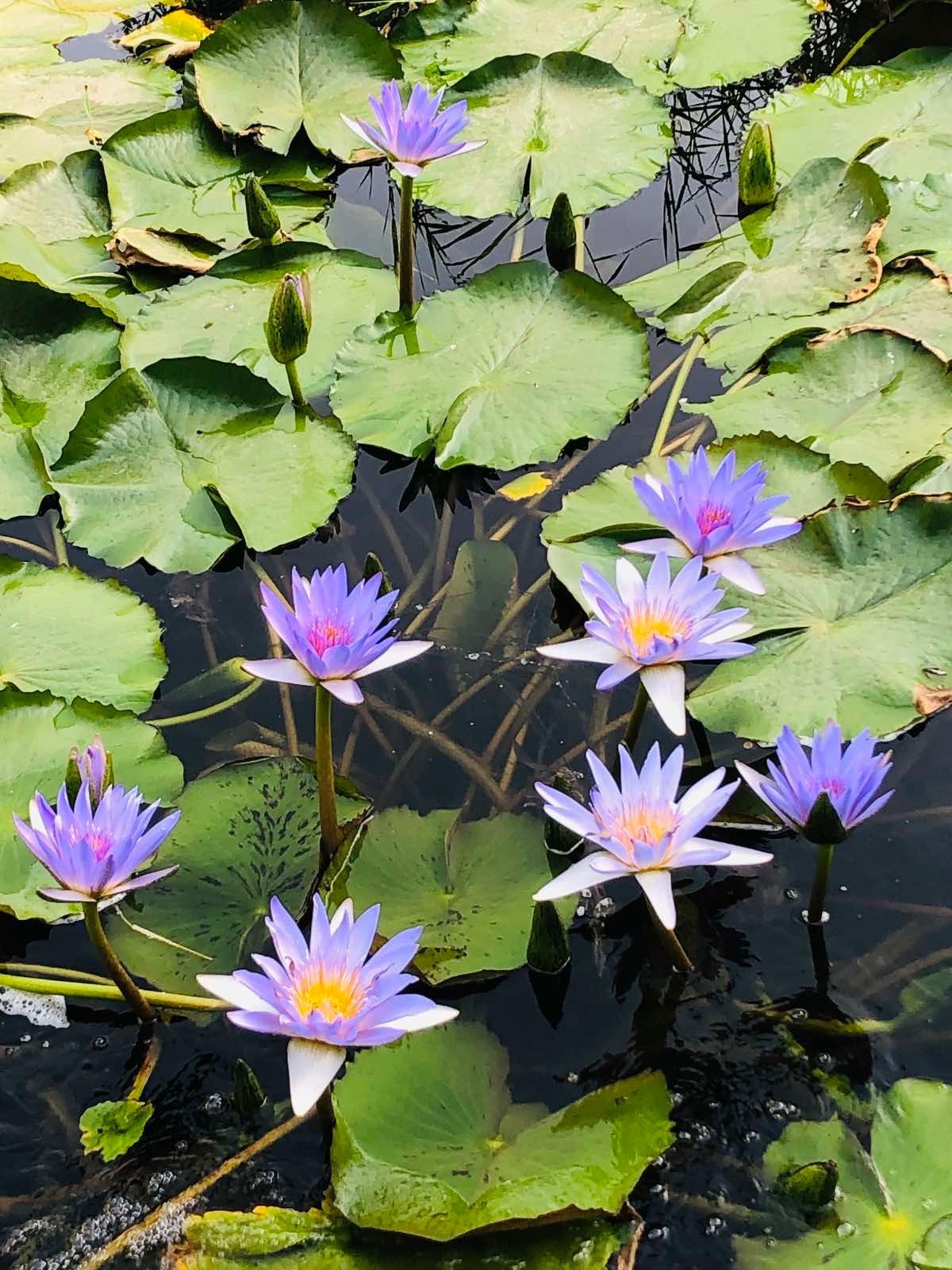
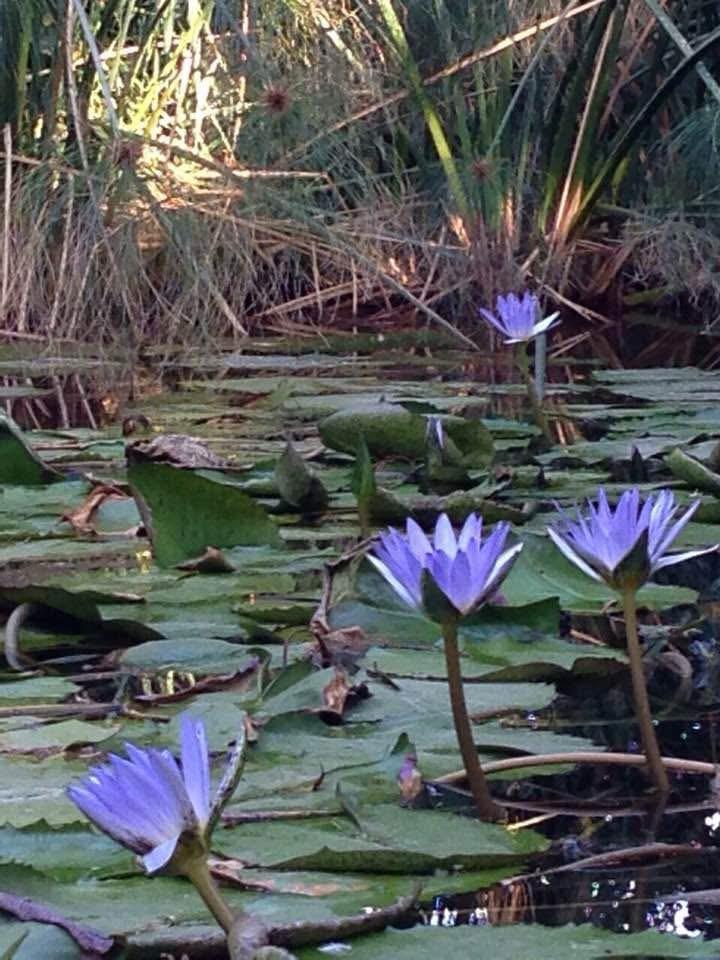
Blue lotus open across the pond with papyrus and reeds behind

The first pair is six weeks apart. In the second, the pale tangle at the centre is a lotus crown, the root mass the plant grows from. It should be underwater. Once it dries out completely it cannot be brought back. The last pair is this water holding, which is what we are asking you to help us get back.

These plants held for seventeen years. They are failing now because the climate around them has changed. The heat is what split the concrete, and the pictures above are what that looks like on the ground.

The restoration

From rescue to sanctuary

Each step funds a finished outcome that we can photograph and report back on. We start with the rescue.

$3,000
This week

Rescue the lotuses

Water, urgent maintenance and care to stabilise the pond and save the crowns still living.

$7,000

Repair the pond

Reline and fix the cracked basin so the water holds. Restore the papyrus banks and replant every rescued lotus.

$9,500

Establish the sanctuary

Formalise Temple Beautiful Flower of Light so the pond is protected by an institution rather than one person's devotion.

$30,500

The full restoration

Restore the surrounding buildings and gardens into a living sanctuary on the Nile.

The vision is a private retreat on this land and the temple brought back to life, held for the people who help rebuild it.

The invitation
For seventeen years this was held quietly, by a few people, out of view. This is the first time the door has been opened.

Mary has carried this pond with private help from a small circle of friends, without a campaign and without a public appeal. The crack in the concrete is the reason the asking finally starts.

A few people can no longer hold this alone. Will we ground it together?

If Egypt is calling you, this could be your first step in flowing your energy that way. Patrons at $144 and above can receive a clairvoyant reading with Tina, or an Egyptian oracle reading with Mary.

Patronage

The seven petals of the lotus

Seven tiers, held in the shape of Seshat's seven pointed star. That star is how Mary receives and how sacred space is built, from full connection to source. The same door is open to you here.

We are working inside the 3D construct of money. What your contribution buys is the energetic and physical rebuilding of this temple site, at whatever size you can give. A temple is raised on a geometric point of the earth, energy first and stone after. Keeping these lotuses alive is that first part. Your contribution rebuilds this temple and sends the signal that some of us are ready, and that we want it now.

IIIIII IVVVI VII
Petal One · Lotus Seed
$33
Your name in the Wall of Blooms, and a photograph the day water returns to the pond.
Petal Two · Bloom Keeper
$144
The above, plus a reading with Tina or Mary.
Petal Three · Priestess or Priest of the Lotus
$333
The above, plus a channelled message received at the pond for you.
Petal Four · Grail Bearer
$444
The above, plus the official Grand Egyptian Museum journal.
Petal Five · Guardian of the Lotus
$1,111
The above, plus a goddess tote bag, your name inscribed at the pond, and live video from the pond itself.
Petal Six · Temple Builder
$2,222
The above, plus a Sekhmet mala, mother of the lotus, handcrafted in Egypt.
Petal Seven · Alchemical Architect
$4,444
The above, with a silver Sekhmet pendant in place of the mala, and a deposit discount on any future trip to Egypt with Mary or Tina.

Every petal includes the one before it. Names are added to the Wall of Blooms below.

The Wall of Blooms

Everyone who has held this open

This is where the names go. Every person who contributes at any petal is listed here for as long as this page exists. The pond was carried privately for seventeen years. This wall is the record of the moment that stopped being true.

The first names will appear here

If you would rather not be named, say so when you give and we will list you as a friend of the garden.

The caretakers

The people who keep this pond

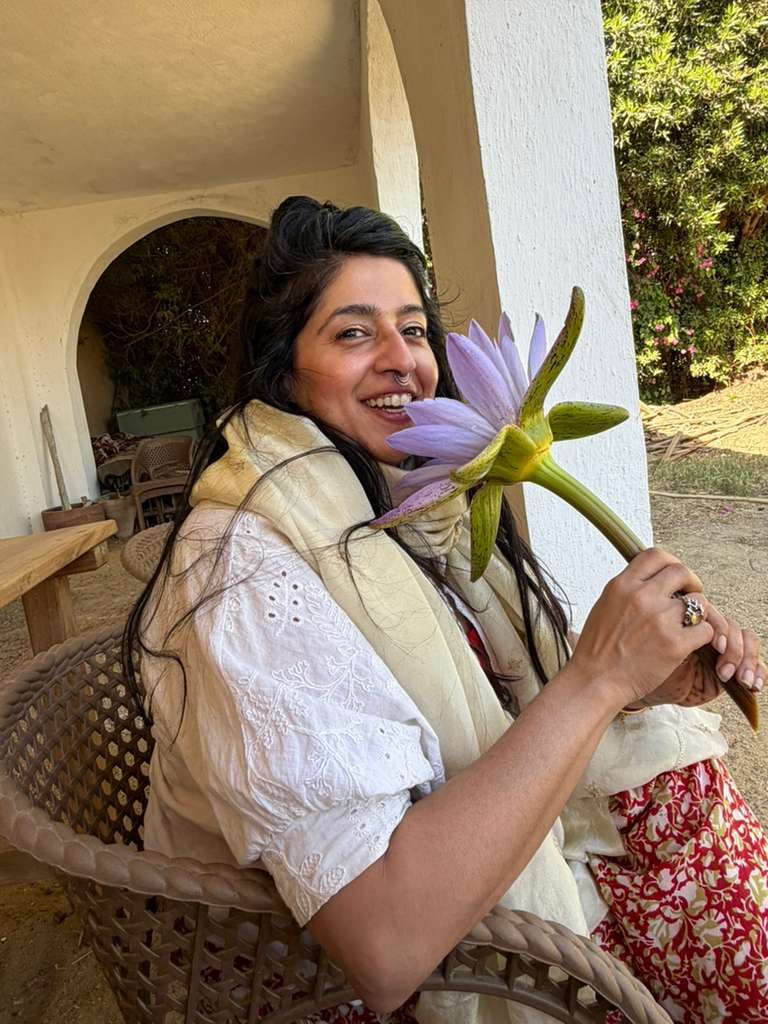
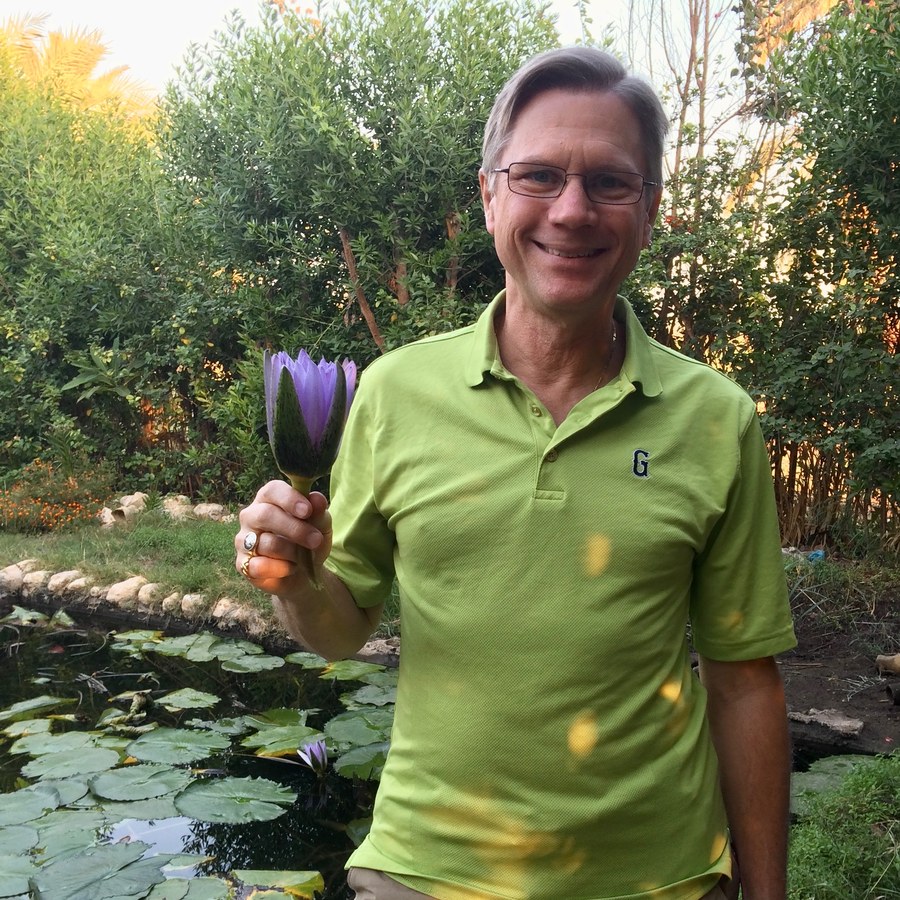
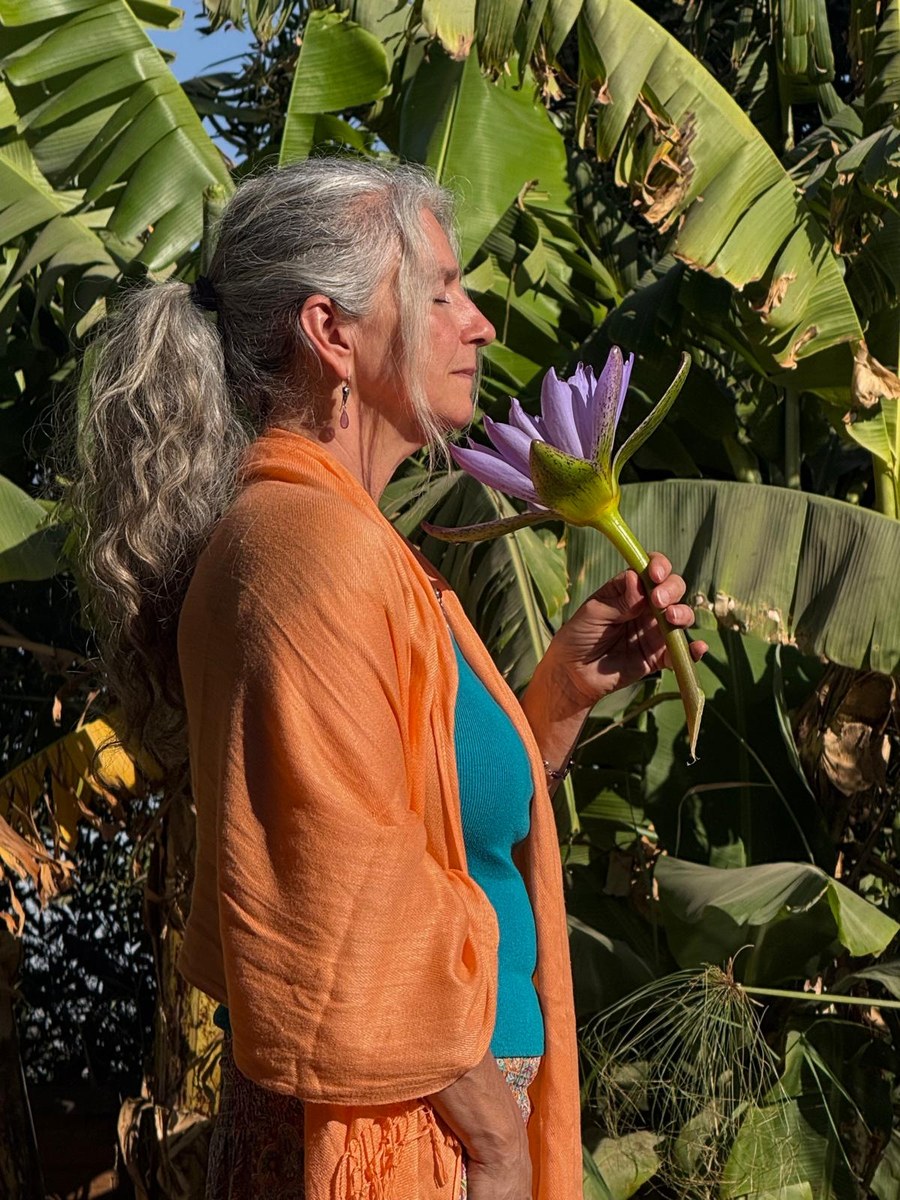
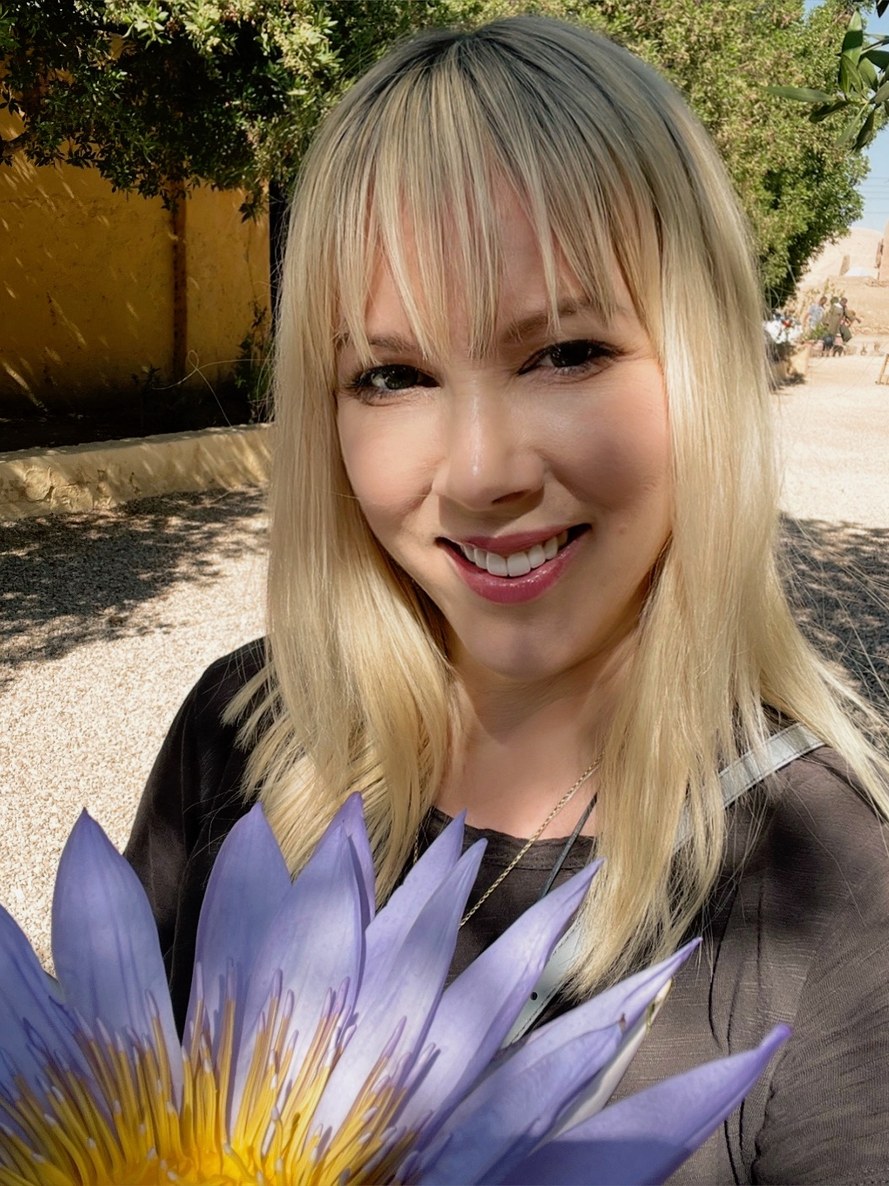
Three of the caretakers sitting together in the courtyard at Luxor, each holding a lotus

In the courtyard beside the pond, each holding a bloom cut that morning.

Others have helped hold this over the years. They are not named here because they have not been asked.

Mary Lomando

Mary Lomando

Founder and guardian

Egyptologist, Jungian astrologer and teacher. She completed her Egyptology degree in Egypt and has spent more than twenty years leading groups through Egypt's temples. She has tended this pond and its lotuses for seventeen years.

Tina Israni

Tina Israni

Caretaker and guardian

Artist, poet and guardian of what is sacred, here to ground it and bear fruit in the new earth timeline. Clairvoyant meditation teacher, geomancer, sound therapy practitioner, psychotherapist and conscious technologist. She came to the pond as a visitor and left as its advocate.

Stewardship

Where every dollar goes

We are a small circle of caretakers and friends of the garden, now formalising as Temple Beautiful Flower of Light.

Patronage is received to a US account held by Mary Lomando until the foundation is established, and transferred directly to the team in Luxor. Receipts and photographic documentation are published with each update.

Contributions are not yet tax deductible. This changes as the sanctuary formalises.

tina.israni@gmail.com

Four thousand years of blooming. Let it not end with us.

Thirty three dollars keeps water in the pond another day.

Become a patron

If you cannot give, sharing this page is patronage of its own.